Solar Inverter Fault Specialists
Solar Inverter Repair North East
Seeing an inverter error or no generation? Arrange an assessment.
Independent TechniciansNo ObligationNo Pressure
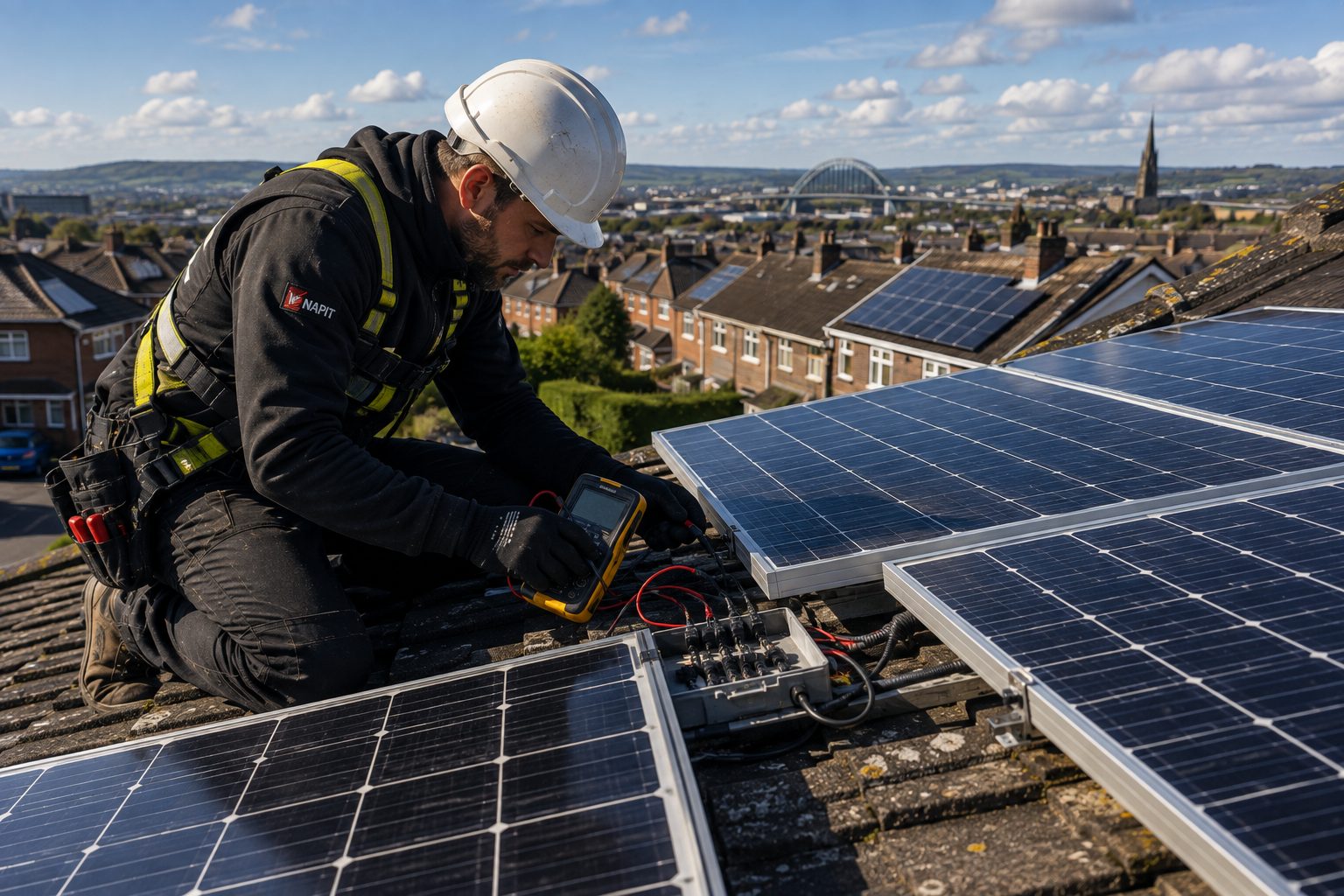
Solar Inverter Fault Specialists
Seeing an inverter error or no generation? Arrange an assessment.
The inverter is central to the operation of most solar PV systems. When it develops a fault, generation can fall sharply or stop altogether. Common warning signs include error codes, warning lights, repeated shutdowns, blank displays and monitoring data that suddenly stops recording normal production.
An inverter warning does not automatically mean the entire unit needs replacing. The cause can relate to the inverter itself or another part of the PV installation. An independent technician will investigate the system and use the symptoms and available fault information to determine the appropriate next step.
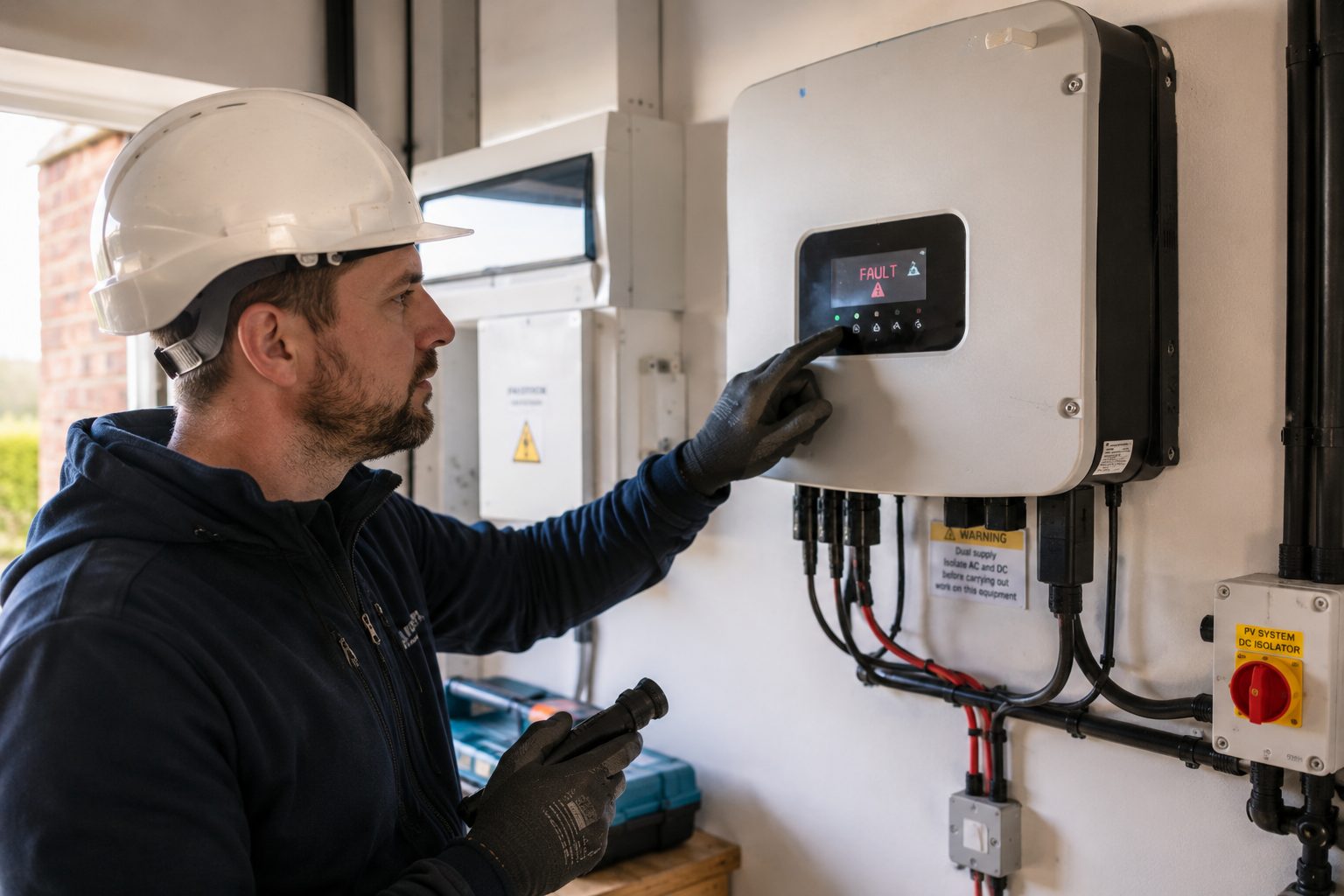
Inverter problems range from straightforward resets and configuration issues to internal failures or faults elsewhere in the solar installation. Diagnosis is important before deciding whether repair or replacement offers better value.
Technicians investigate displayed error messages and assess the wider system where necessary to determine what is triggering the warning.
A blank or apparently dead inverter may be linked to supply, protection, PV input or internal equipment problems.
Intermittent inverter operation can require investigation of operating conditions, electrical connections and the equipment itself.
When an inverter is beyond economical repair, a technician can assess the existing system and discuss an appropriate compatible replacement.
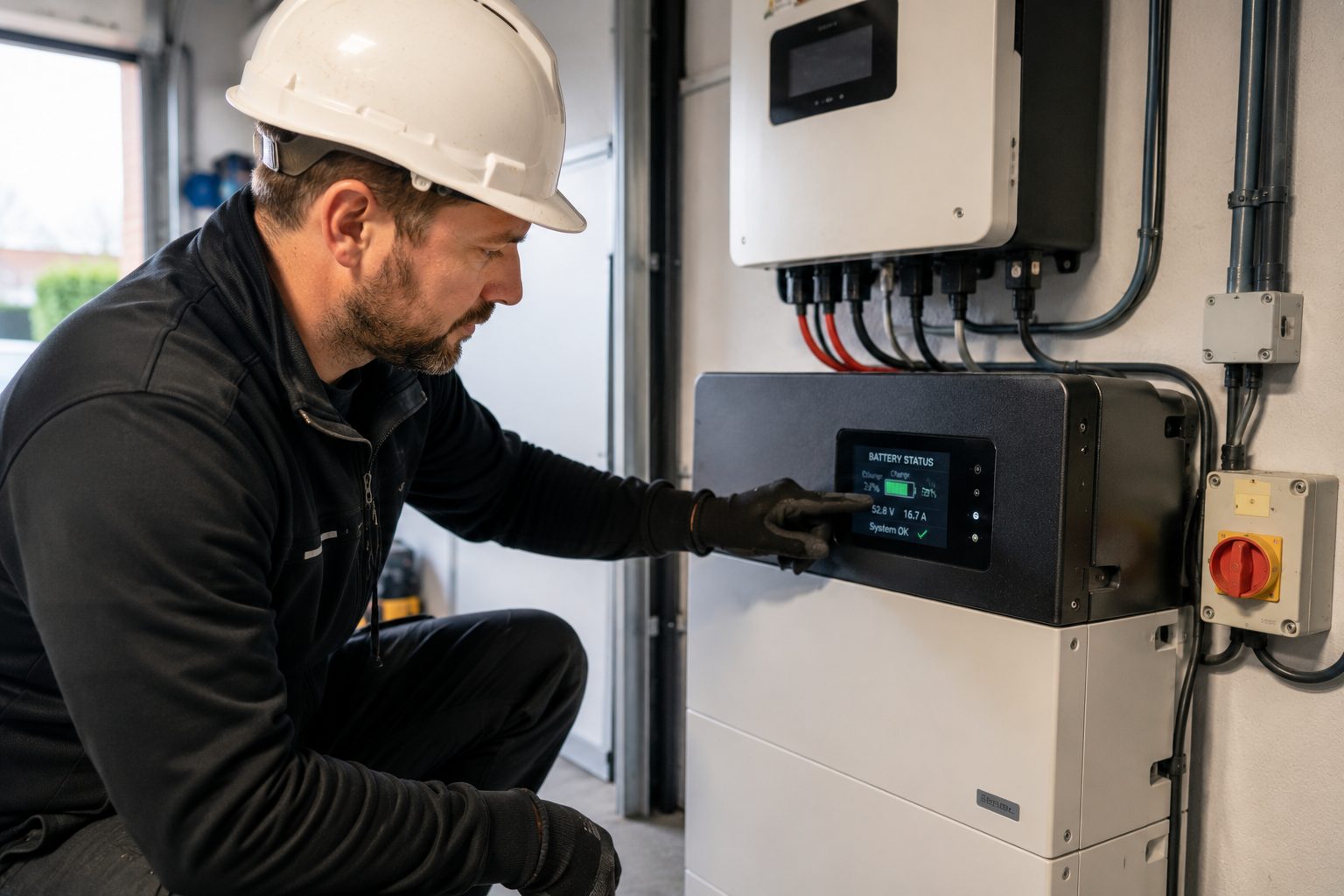
Technicians investigate why the inverter is reporting a problem before recommending replacement.
An inverter warning can originate elsewhere, so the surrounding PV system may need to be considered.
Where equipment is ageing, technicians explain the relative merits of repair and replacement.
Make a note of any inverter error code and get in touch. It can help the technician understand the problem before the visit.
Free — no obligations

We gather information about error codes, warning lights, generation loss and the inverter model.
The technician assesses relevant system components and operating conditions to identify the source of the fault.
The technician determines whether corrective work is practical or replacement needs to be considered.
The technician explains the available options and costs before further work is undertaken.